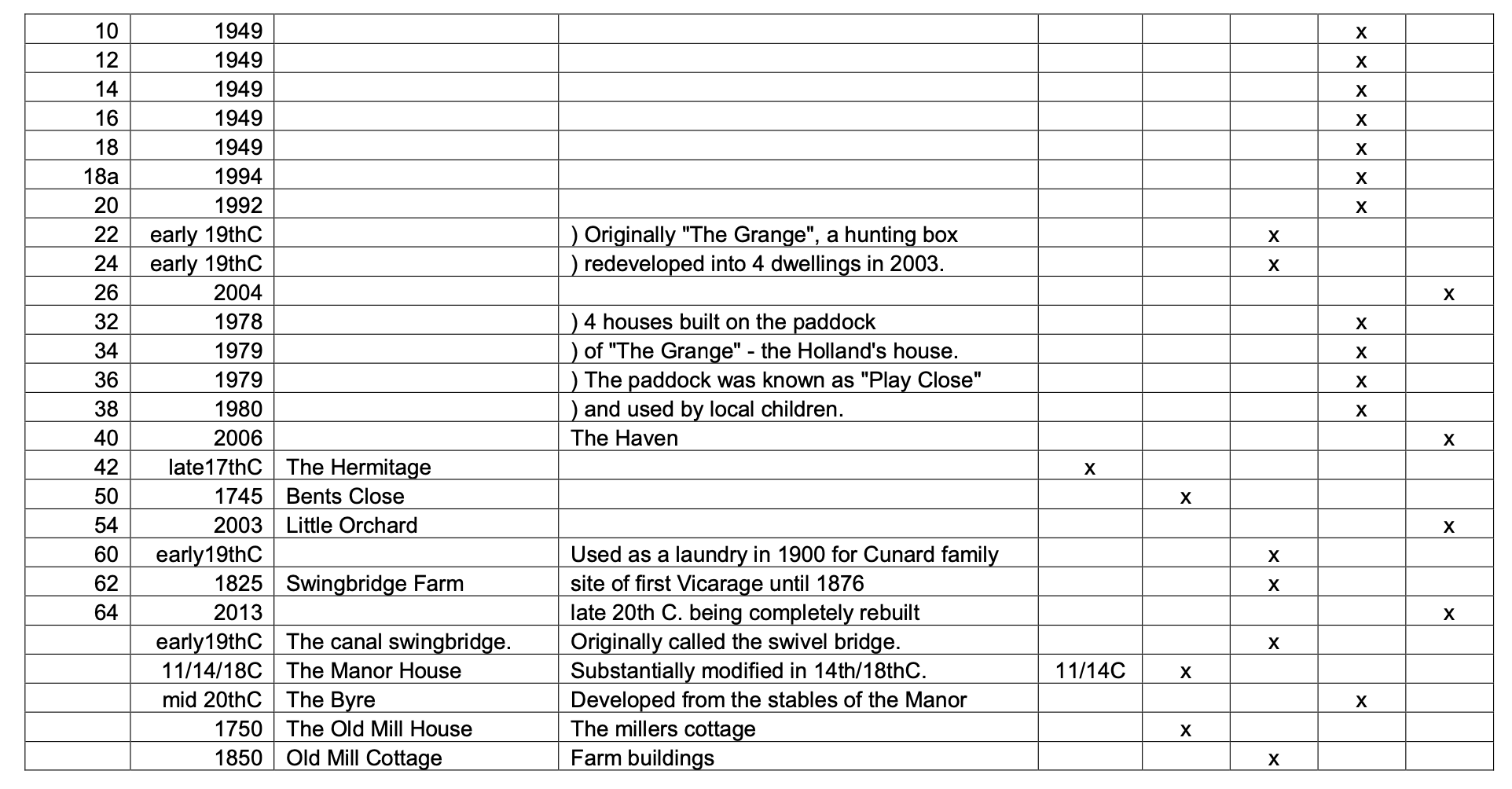
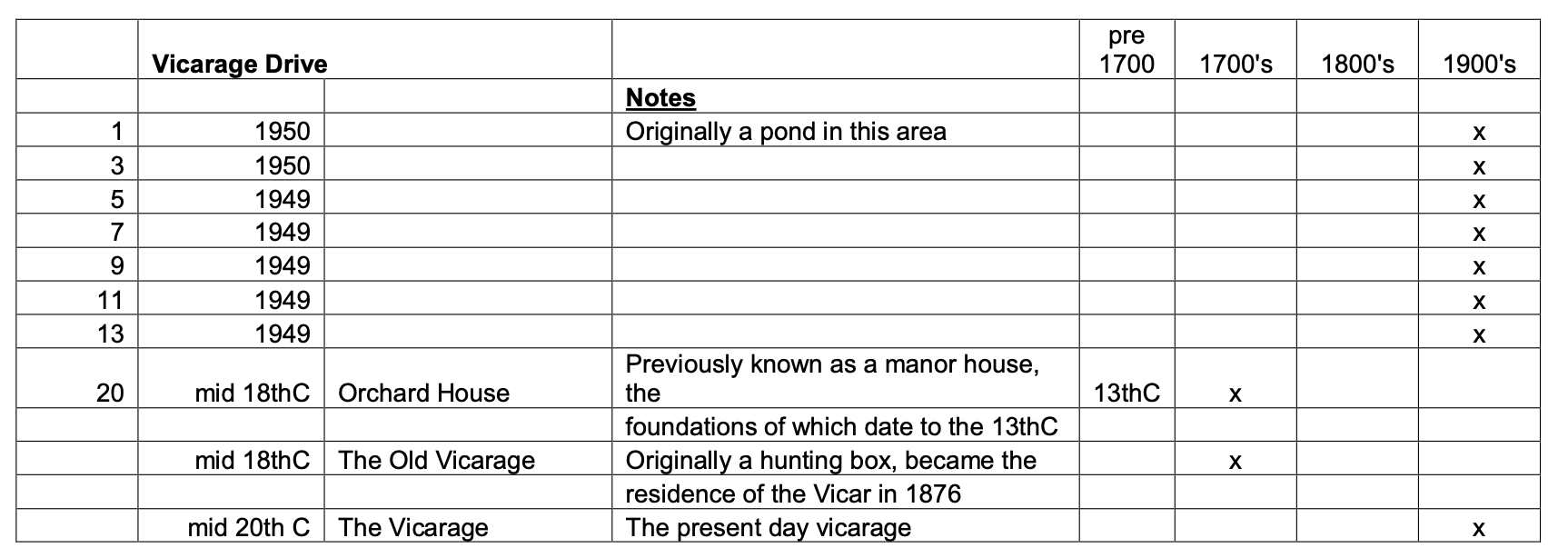
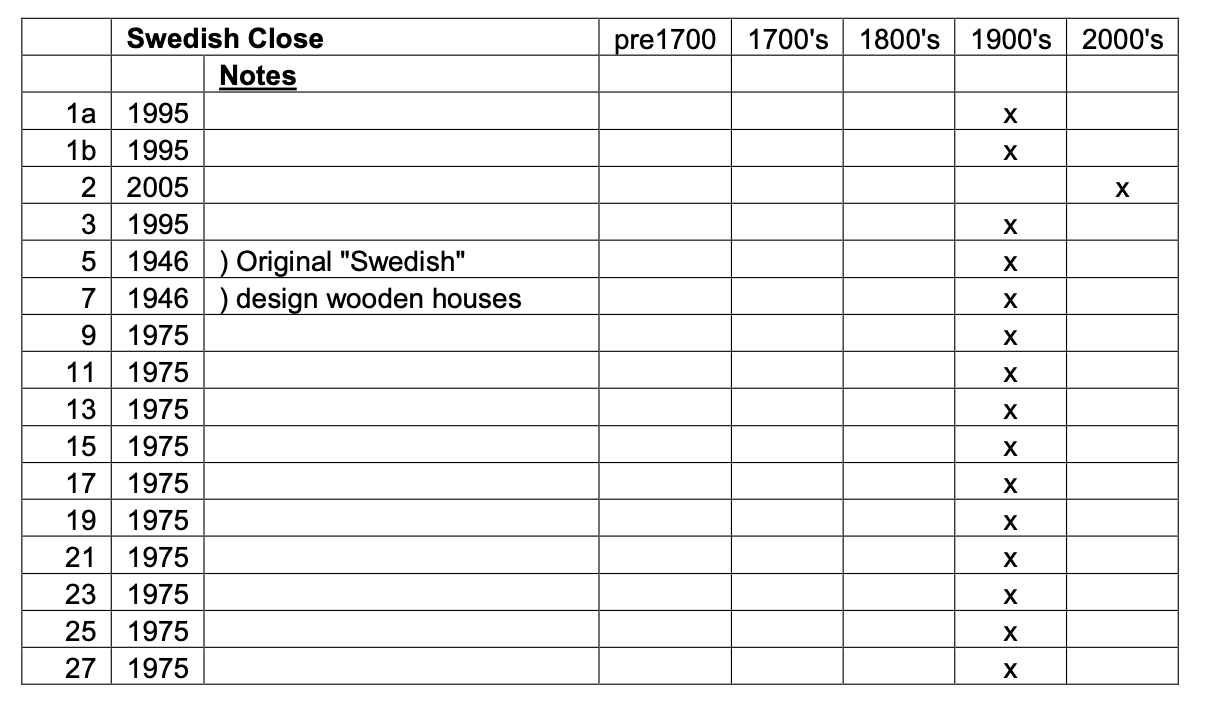
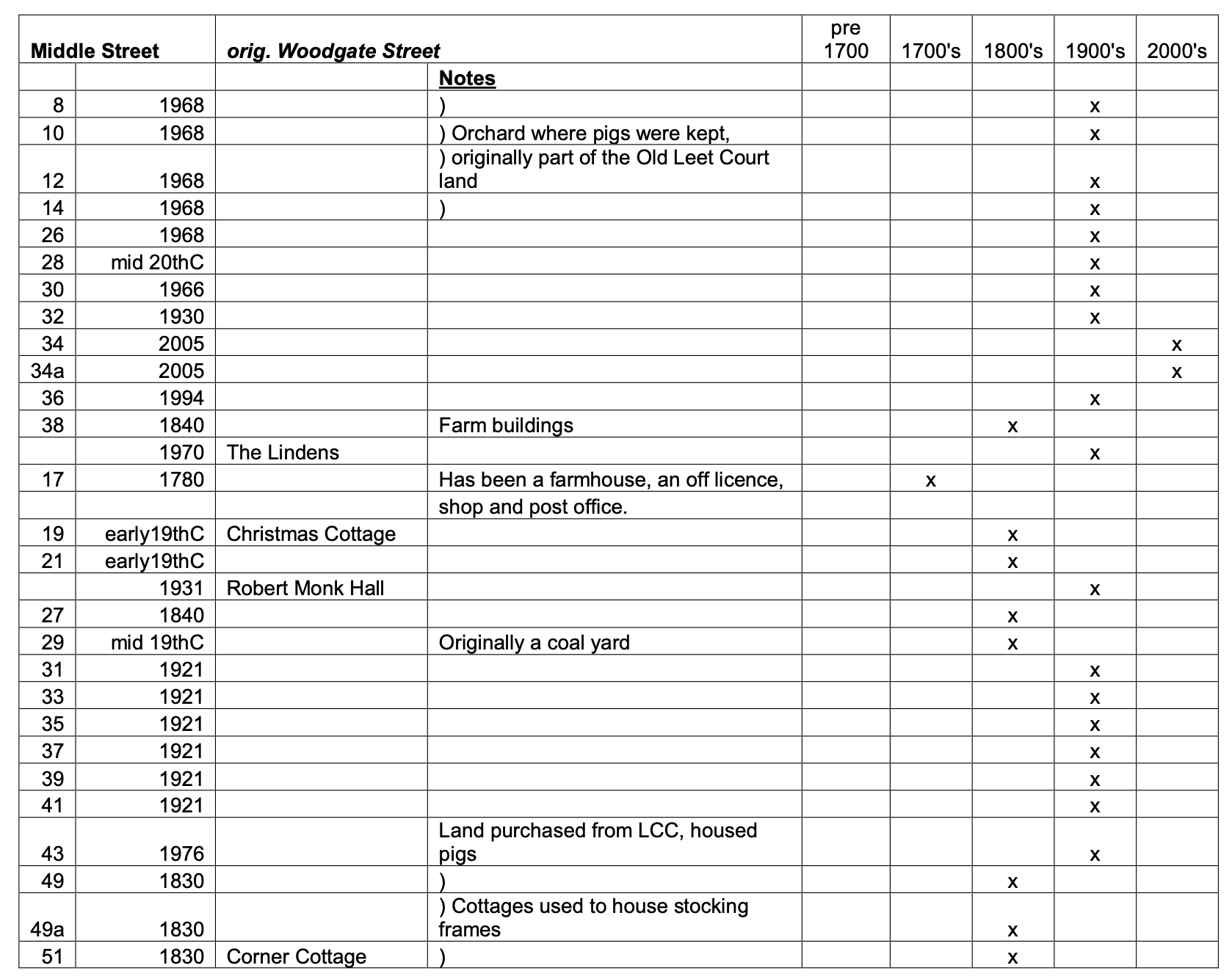
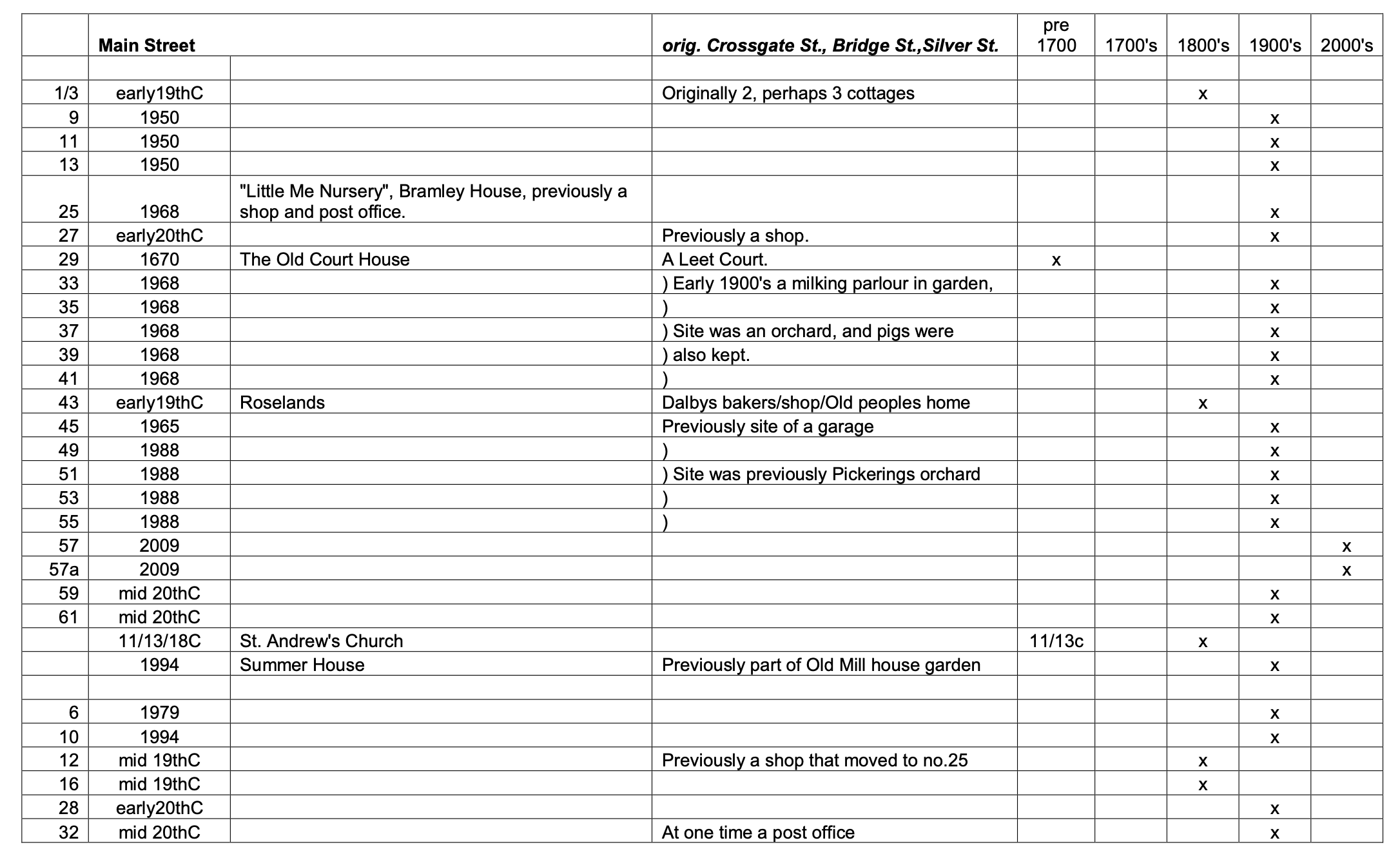
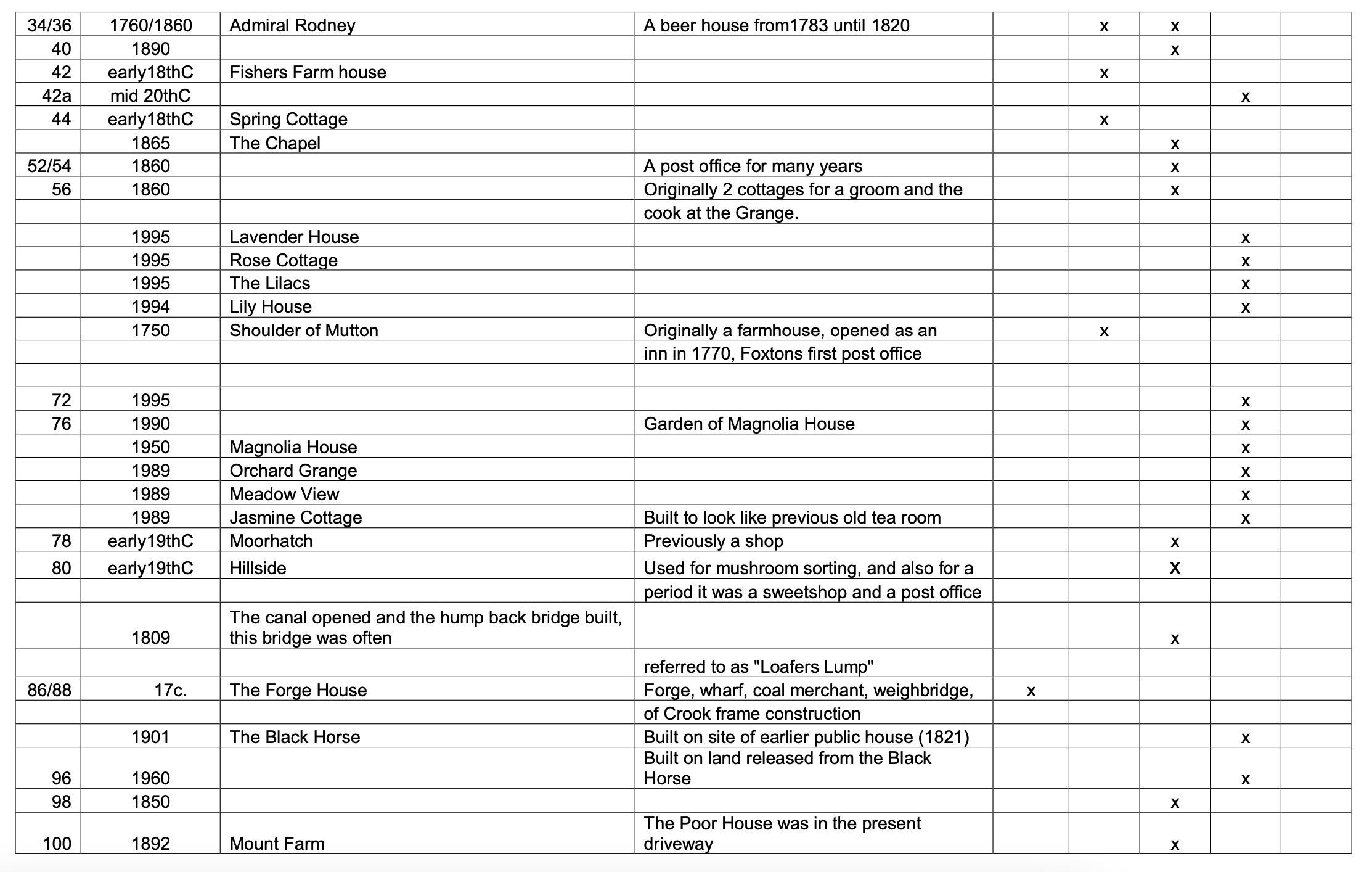
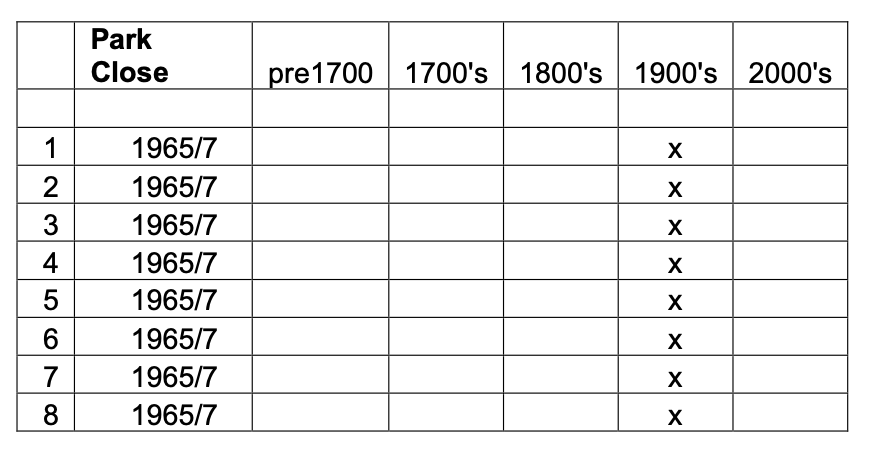
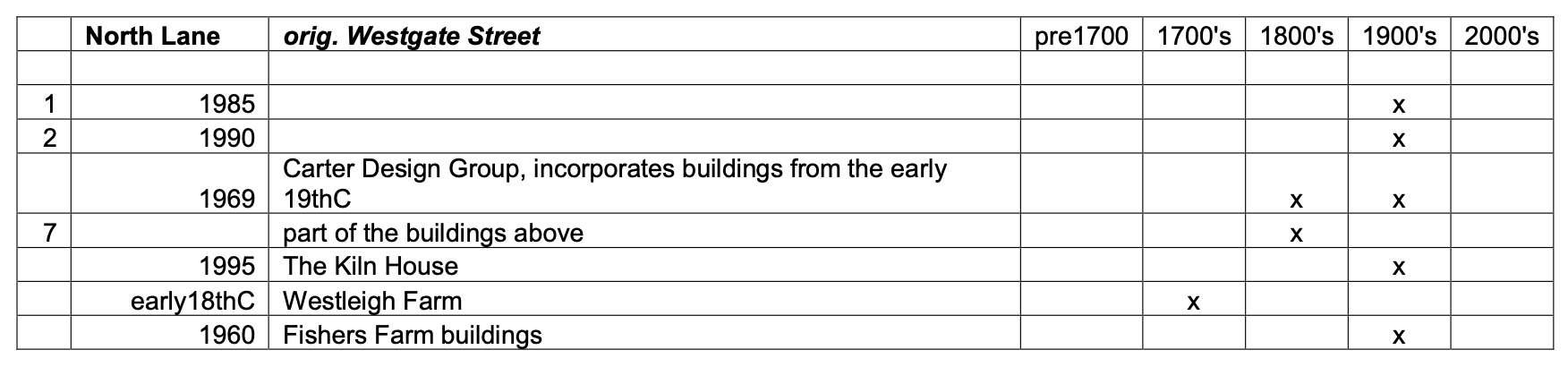
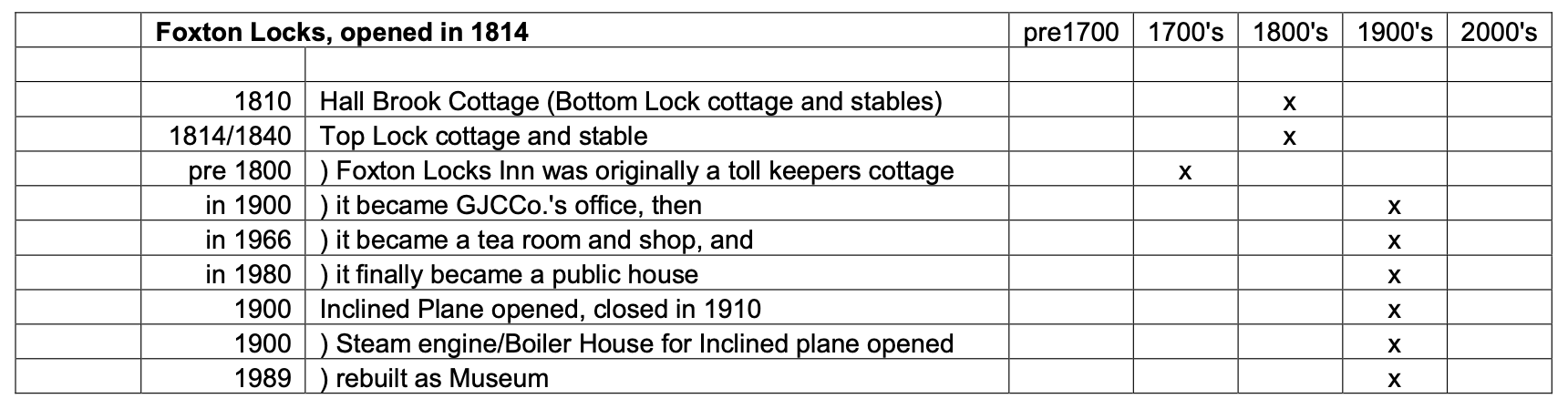
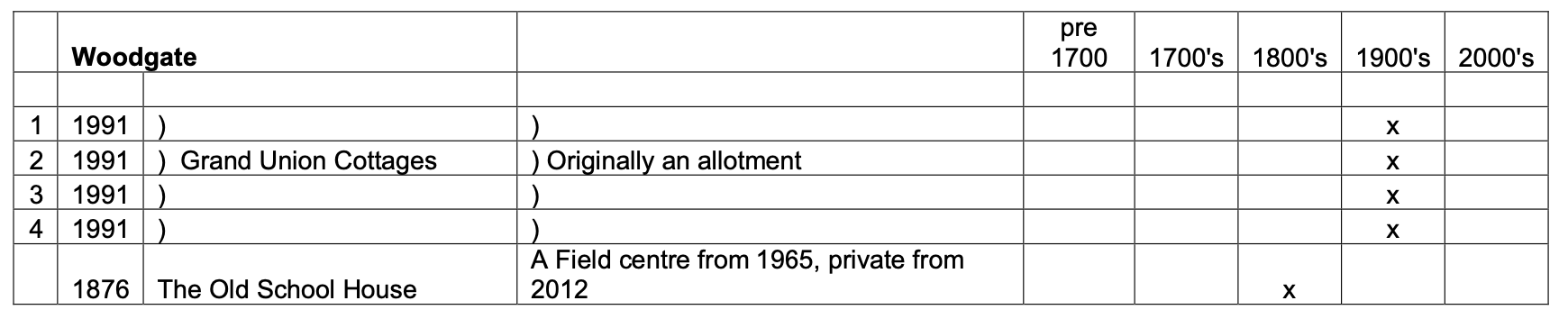
A Foxton Heritage Project. At the end of 2012 a research project was undertaken to date when the existing residential dwellings in the village of Foxton were built.
David Chambers O.B.E., May 2013 With thanks to Mrs. D. Ward and Mr. C. Bedford.
…
Some notes on housing types and population density of Foxton The village of Foxton has existed for well over a 1000 years with the oldest building being St Andrews’s church that was originally built around 1200. The settlement developed and in the 11th C the earliest part of the Manor house was built.
The building of a second manor house, whose foundations are Orchard House, followed this in the 13th C.
Whereas Foxton was for many centuries a truly agricultural village this did start to change towards the end of the 18th C. During the latter part of the 1700’s and until the middle of the 19th C there were many dwellings that housed Stocking Frames where whole families, parents and children, toiled to produce worsted stockings.
In 1801 whereas 30 people were listed as agricultural workers some 49 were recorded as being in “trade or manufacture”. This period also saw the development of the Foxton orchards growing the local variety “Foxton Pride”. There was also a mushroom ketchup factory in the village at this time, and whilst apple growing and mushroom collection still required agricultural workers, these would have been more seasonal and possibly part time occupations.
Thus between 1750 and 1850 the requirement for traditional agricultural workers reduced and the primitive hovels in which they lived were replaced with more substantial brick cottages. Also during this period the large “Hunting Box” dwellings that had been built fuelled the demand for domestic workers or servants and by 1881 the number of domestic workers at 30 far outweighed those in agriculture at 12.
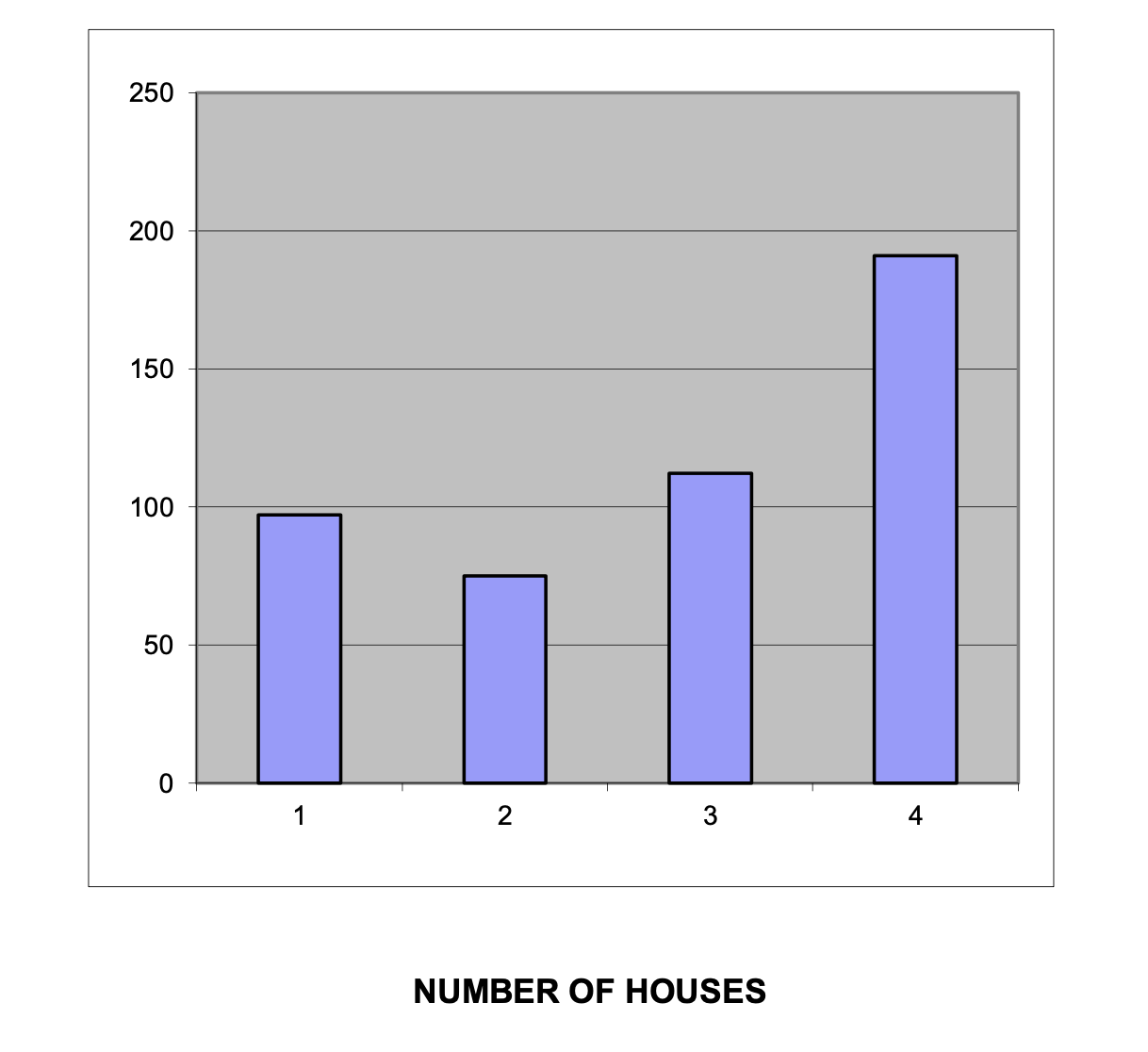
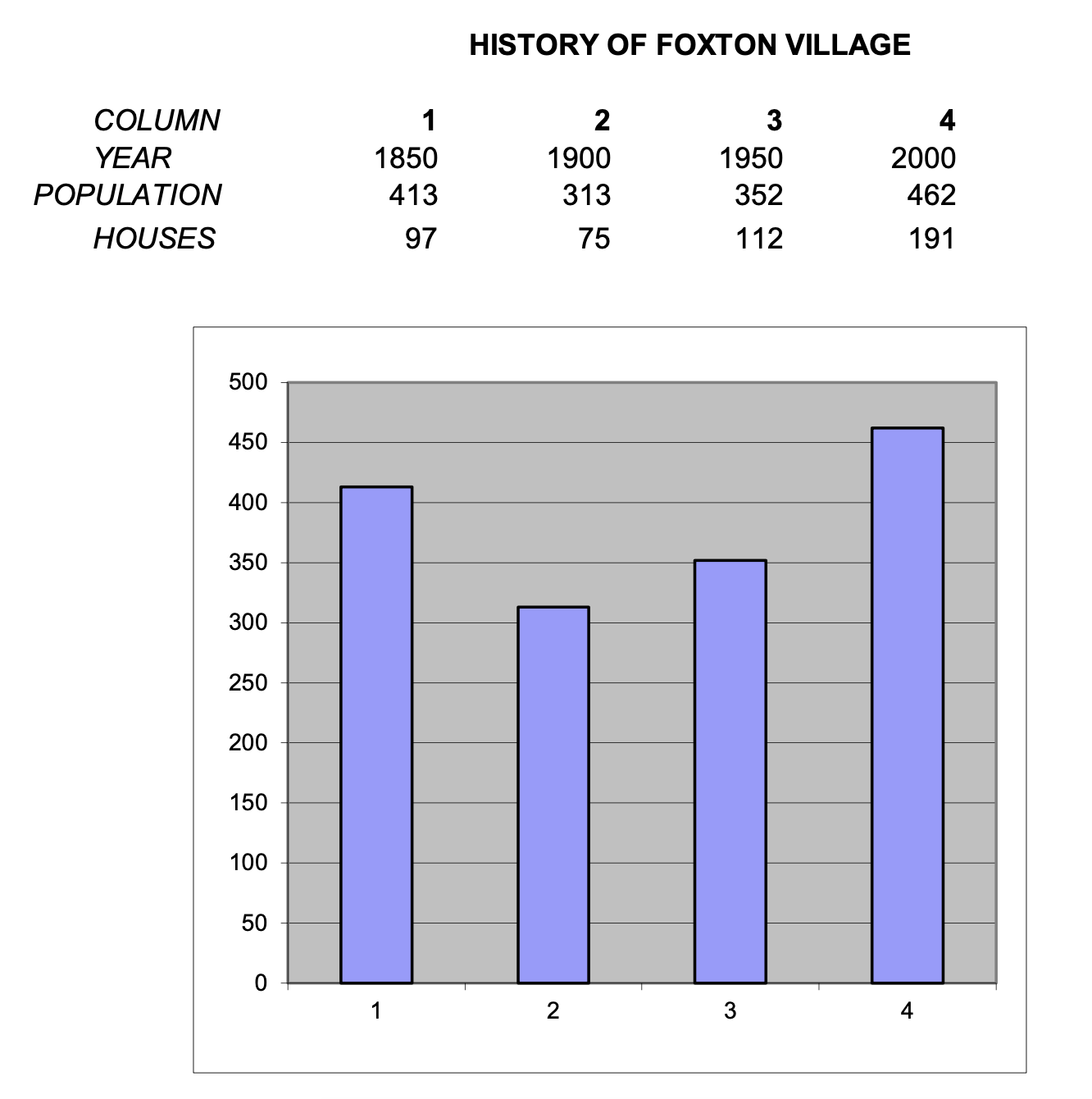
In 1800 the population was around 420 inhabitants reducing to 348 in 1880. At this time there were 94 dwellings in the village of which 89 were occupied. However 10 years later in 1890 the population had further reduced to 284 and of the 90 dwellings only 67 were occupied with 23 remaining vacant. 30 years later in 1920 the population had started to increase again with 348 inhabitants, however the number of dwellings had reduced further to around 75.
This brief statistical over view indicates how at the end of the 19th C there was a migration away from village and agricultural life as new employment opportunities stemming from the Industrial revolution lured people away from rural life. During the first two decades of the 20th C the statistics suggest that despite an increasing population the house numbers continued to fall.
There are perhaps a number of reasons for these seemingly contradictory elements. Families were larger as infant mortality began to reduce, the traditional small and insubstantial agricultural workers dwellings were being replaced with larger cottages, and the financial insecurity caused by the 1st WW caused overcrowding in some existing dwellings. There appears no definitive answer to this contradiction and it is likely that all of these factors played their part to a greater or lesser degree.
In Foxton today we have around 460 inhabitants living in 190 houses, a ratio of 2.4 people per house. In 1920 there were approx. 350 inhabitants living in 75 houses, a ratio of 4.7 per house. Whilst in 1880, 350 inhabitants lived in 89 houses a ratio of 3.9 people per house, and this ratio seems fairly constant throughout the 19th C. It would appear therefore that the first 20 years of the 20th C gave rise to the maximum occupancy rate for at least the last 200 years.
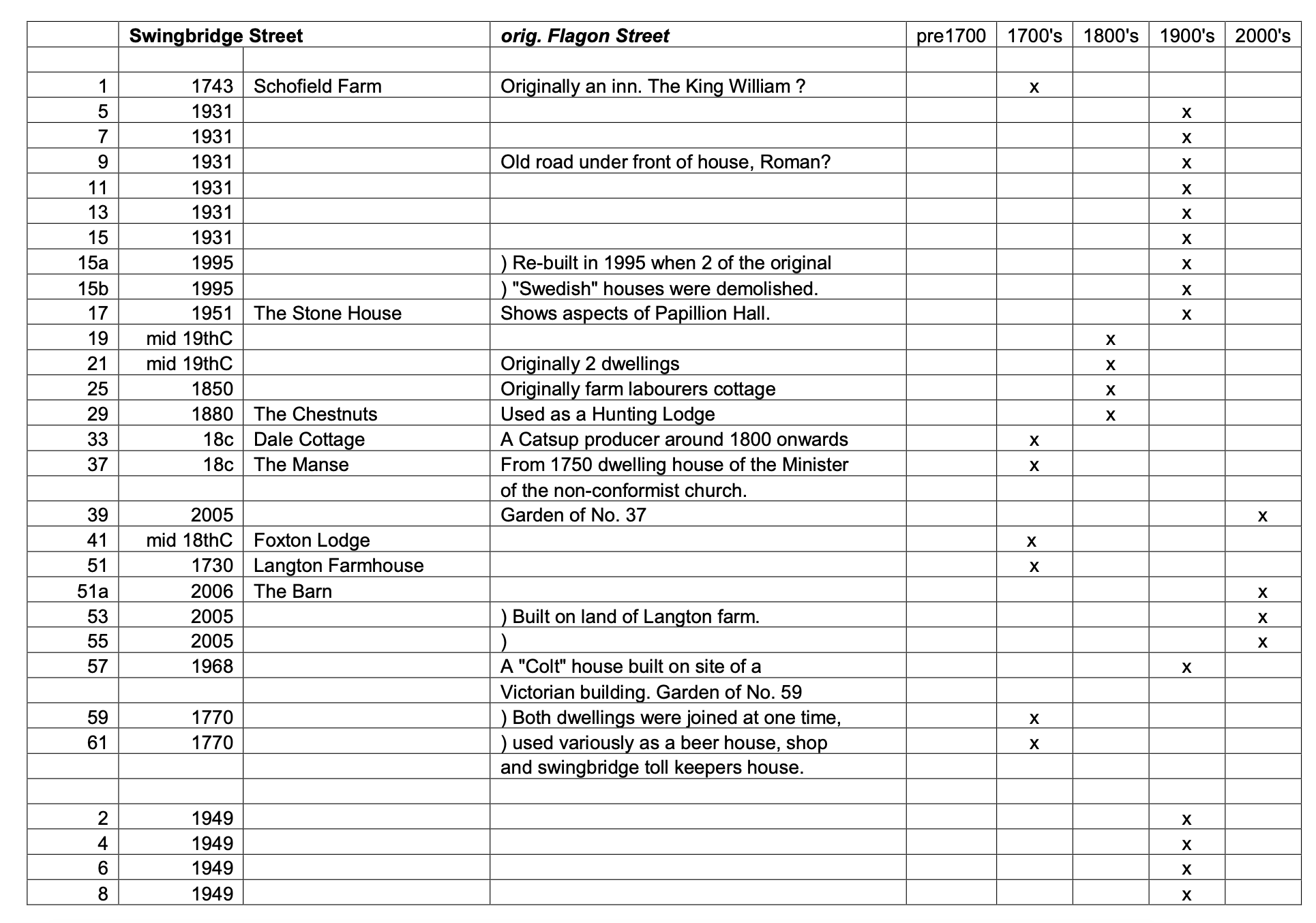
From an historical perspective 2% of the houses in Foxton today originate from the 1600’s, 9% from the 1700’s, 18% from the 1800’s, 64% from the 1900’s, and 7% from the present century. The largest increase having come about in the middle of the 20th C before and after WW 2.
…





…